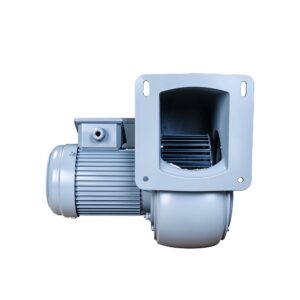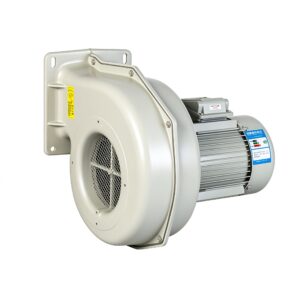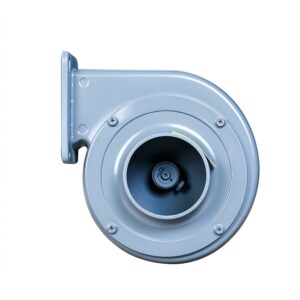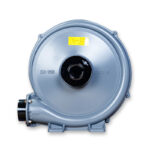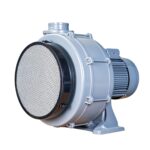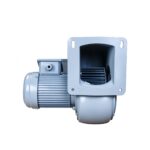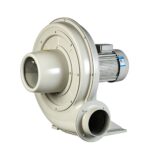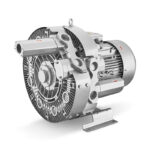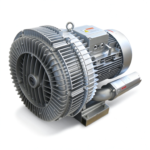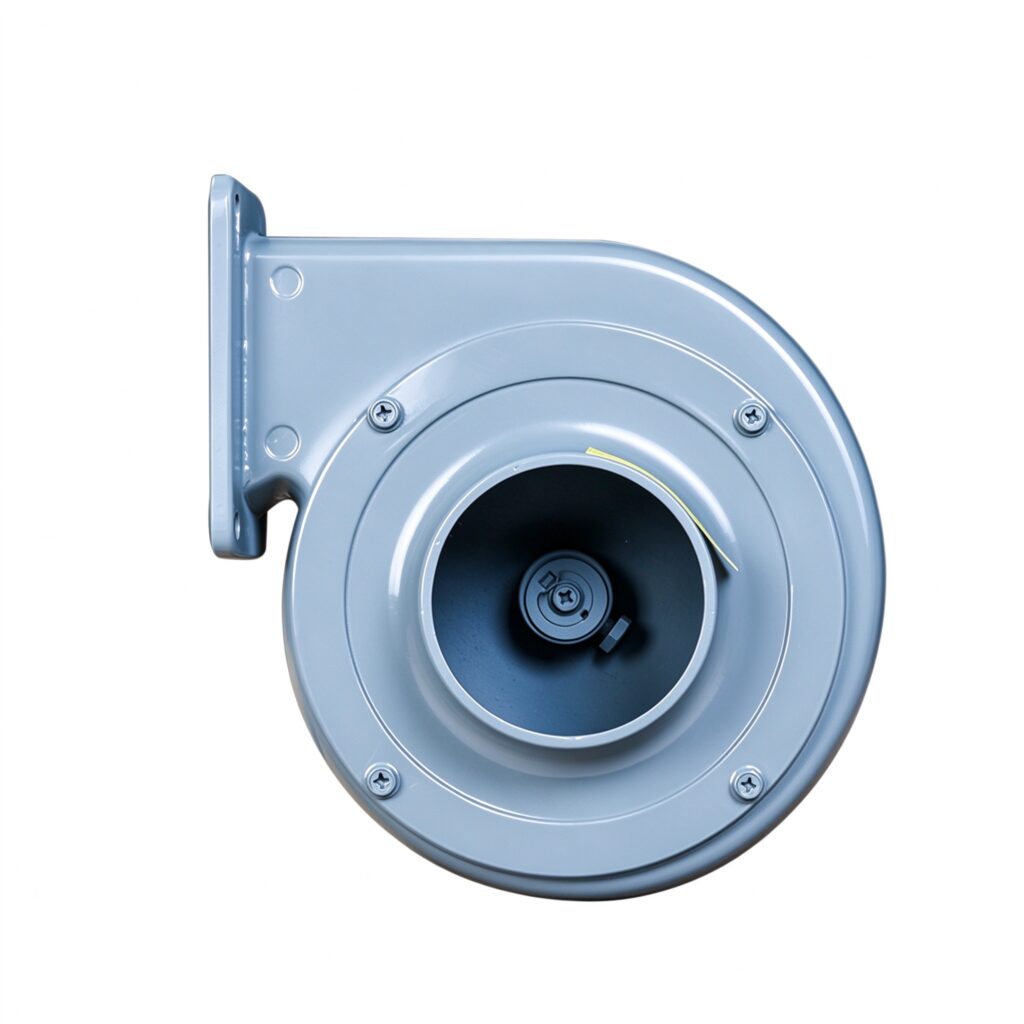
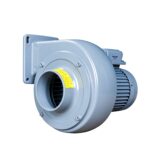
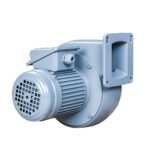


MS-202A 0.2KW Low Pressure Blower
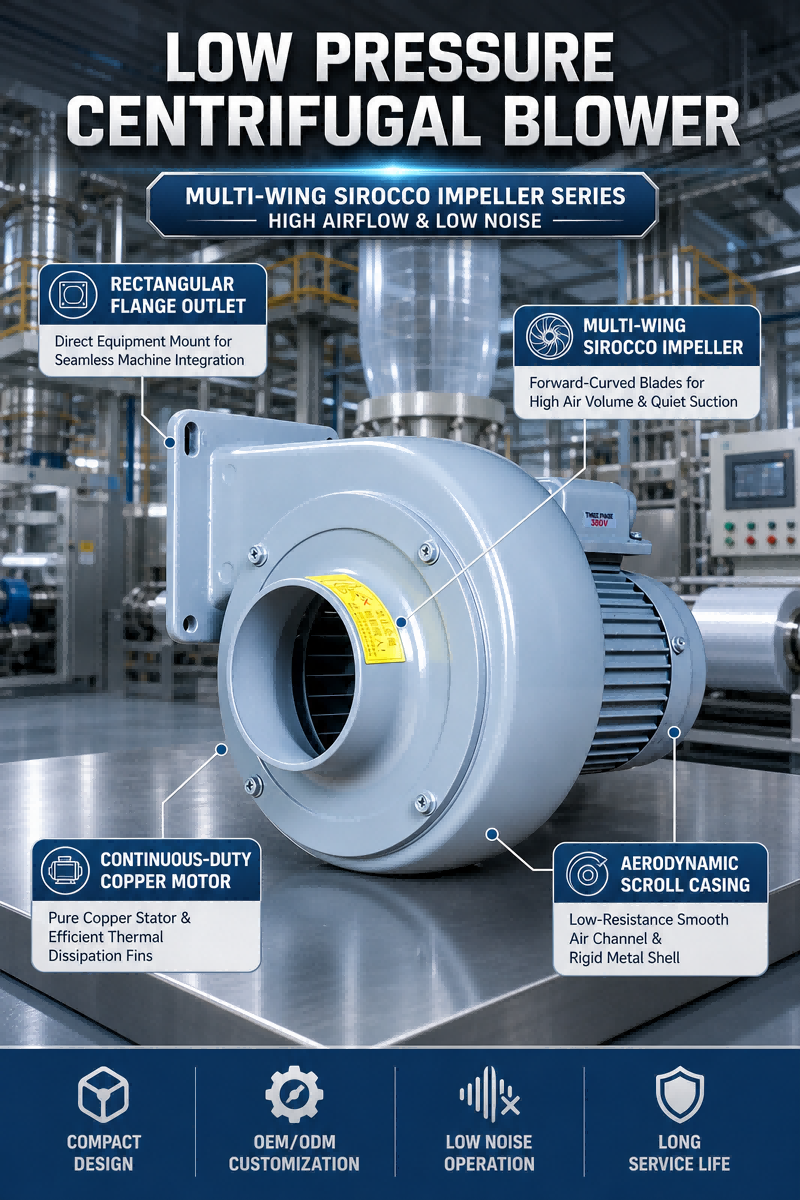
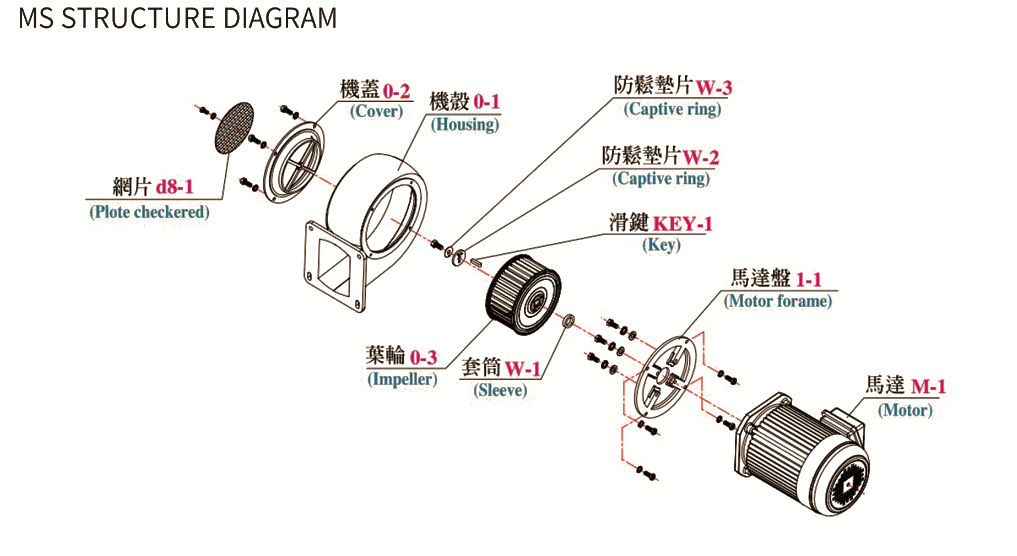
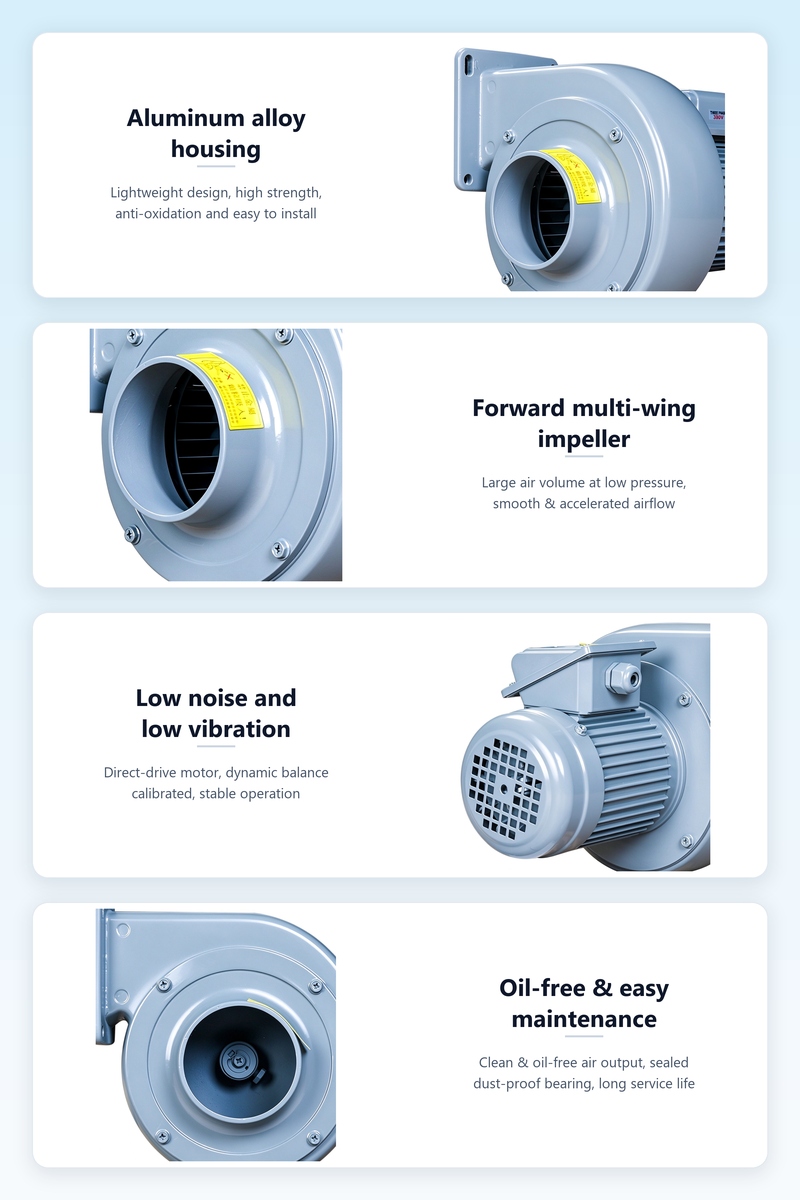
- ADC12 Aluminium Alloy
- 100% Copper Coil
- Oil-free, Maintance-free, Low-noise, Low-vibration, Energy-saving
- High suction air and high pressure blowing
- Can work continuously for 24 hours
Request a Quote
Enter the quantity you need and add to your quote list for pricing inquiries.
Tags: Low Pressure Blower, Low Pressure Centrifugal Blower
Description
| Frequency | 50 (Hz) | 60 (Hz) |
| Rated Power | 0.2 (kW) | 0.23 (kW) |
| Rated Voltage | 380 (V) | 380 (V) |
| Rated Current | 0.9 (A) | 0.9 (A) |
| Max Vacuum | 0.5 (KPa) | 0.8 (KPa) |
| Max Air Flow | 8 (m³/min) | 10 (m³/min) |
| In/Out | IN 125/OUT 95*100 | IN 125/OUT 95*100 |
| Sound | 60 dB(A) | 65 dB(A) |
| Weight | 6 (kg) | 6 (kg) |
Specifications
FAQ
How do I select a low pressure blower?
Low pressure blowers are air-volume driven, so confirm the required airflow (m³/h or m³/min) first, then the total system static pressure — normally in the low range, up to about 10–13 kPa (≈1,000–1,300 mmH₂O). After that, match the medium (clean air, dusty air, slightly warm air), installation type (floor-mounted, duct-inline, portable), ambient temperature and altitude — thin air at high altitude reduces actual delivered pressure and volume, so density correction is needed. Check duct diameter, duct resistance and intake/discharge conditions as well, since oversized resistance easily pushes a low-pressure unit off its curve. Tell us your airflow, pressure and application and we will confirm the model or customize it.
What voltage and frequency options are available?
Standard options include single-phase 220V/50Hz and three-phase 380V/50Hz. For overseas markets we offer 3-phase 220V/60Hz, 440V/60Hz, and 110V/60Hz single-phase for North America. 50/60Hz dual-rated and IE2/IE3 high-efficiency motors are available, and custom voltage and frequency for different power grids can be produced to order.
Can it run continuously? How much maintenance is required?
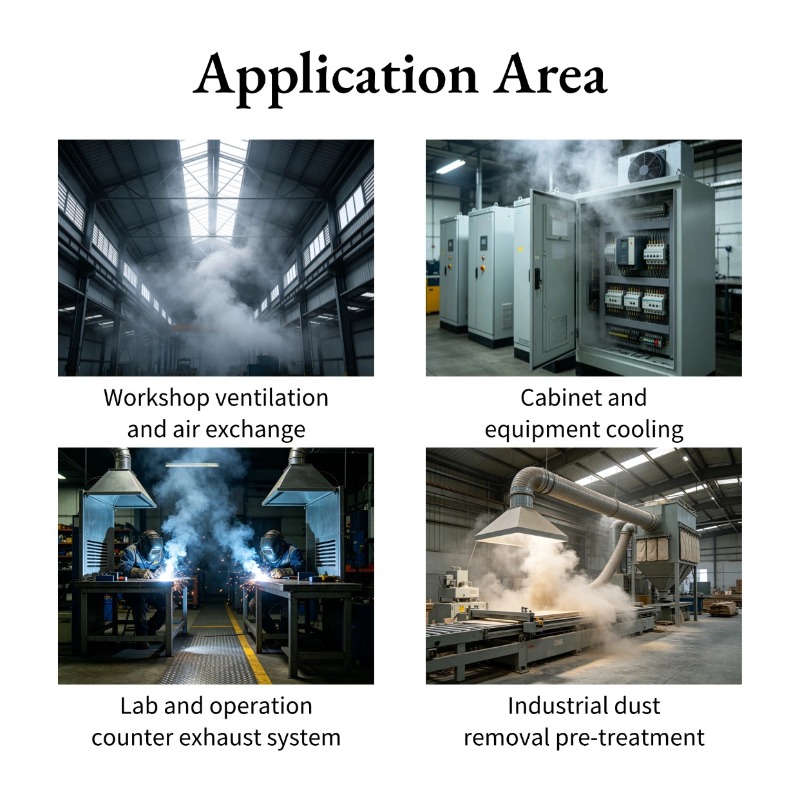
Yes — low pressure blowers run on a low-speed, lightly loaded impeller, so 24/7 continuous duty is normal, and they are commonly used for aeration, drying, ventilation and combustion air supply. Maintenance is simple: clean or replace the inlet filter regularly, keep the impeller and duct free of dust build-up, check mounting bolts and couplings/belt tension periodically, and lubricate or replace bearings at the intervals stated in the manual. No complicated upkeep.
How are noise and vibration controlled?
Impellers are dynamically balanced and the low running speed keeps noise and vibration naturally lower than medium or high pressure units. Anti-vibration bases or pads isolate the unit from the floor, and silencers, soundproof enclosures and flexible duct connectors are optional to cut airborne noise and stop vibration from travelling through the ductwork.
What certifications and protections should I check before purchase?
Check motor insulation class (Class F recommended), IP protection grade (IP54/IP55 for outdoor or dusty sites), and whether the motor is VFD-compatible if you plan to control airflow by speed. CE, ISO and other certifications are available on request. Thermal protection is standard; overload and phase-loss protection, plus dust-proof or moisture-proof construction, can be added for harsh environments.
Lead Time Estimator
Enter your order quantity to get an instant estimate of production and shipping time.
Estimated total lead time–~–
- Production
- Shipping
- Estimated arrival (if ordered today)
This estimate is for reference only and does not constitute a contractual commitment. Actual lead time depends on order details, material availability, production schedule, customs clearance and carrier capacity. Please contact us for a confirmed delivery date.