Scan to add us on WeChat




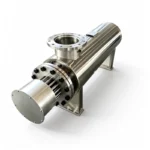


Pipeline Heater
This is an energy-efficient device that uses electrical energy to directly heat the medium (liquid or gas) flowing through a pipeline. Its core structure consists of multiple tubular heating elements, a cylinder body, and an intelligent temperature control system. Using an insertion-type or external-wrap heating method, it rapidly heats the medium to the set temperature as it passes through the pipeline, thereby achieving preheating, heat tracing, or temperature raising.
Request a Quote
Enter the quantity you need and add to your quote list for pricing inquiries.
Description
| Model | Power(KW) | Liquid pipeline heater | Liquid pipeline heater | Gas pipeline heater | Gas pipeline heater | pipe diameter | Temperature control range | Temperature control accuracy | power supply | control mode |
|---|---|---|---|---|---|---|---|---|---|---|
| inside dimension | connection directly | inside dimension | connection directly | \ | \ | \ | \ | \ | ||
| KH-GD-5 | 5kw | DN80*500 | DN25 | DN100*500 | DN25 | \ | \ | \ | \ | \ |
| KH-GD-10 | 15kw | DN80*700 | DN32 | DN100*700 | DN32 | \ | \ | \ | \ | \ |
| KH-GD-15 | 15kw | DN125*700 | DN32 | DN125*700 | DN32 | \ | \ | \ | \ | \ |
| KH-GD-20 | 20kw | DN150*800 | DN40 | DN150*900 | DN40 | \ | \ | \ | \ | \ |
| KH-GD-30 | 30kw | DN150*800 | DN40 | DN200*1200 | DN40 | \ | \ | \ | \ | \ |
| KH-GD-40 | 40kw | DN200*1200 | DN50 | DN200*1200 | DN50 | \ | \ | \ | \ | \ |
| KH-GD-50 | 50kw | DN200*1000 | DN50 | DN300*1200 | DN50 | \ | \ | \ | \ | \ |
| KH-GD-60 | 60kw | DN200*1200 | DN50 | DN300*1300 | DN50 | \ | \ | \ | \ | \ |
| KH-GD-80 | 80kw | DN200*1200 | DN80 | DN300*1800 | DN8O | \ | \ | \ | \ | \ |
| KH-GD-100 | 100kw | DN250*1800 | DN80 | DN300*1600 | DN100 | \ | \ | \ | \ | \ |
| KH-GD-120 | 120kw | DN250*1800 | DN80 | DN300*1800 | DN100 | \ | \ | \ | \ | \ |
| KH-GD-150 | 130kw | DN300*1800 | DN100 | DN300*1800 | DN125 | DN25 | 980°C | P10+1 | 380V 50Hz | Microcomp uter PID control |
| KH-GD-150 | 180kw | DN300*1800 | DN100 | DN350*1800 | DN125 | \ | \ | \ | \ | \ |
| KH-GD-200 | 200kw | DN300*1800 | DN100 | DN300*1800 | DN150 | \ | \ | \ | \ | \ |
| KH-GD-240 | 220kw | DN300*1800 | DN125 | DN300*1800 | DN150 | \ | \ | \ | \ | \ |
| RH-GD-280 | 280kw | DN300*1800 | DNI25 | DN300*1600 | DN150 | \ | \ | \ | \ | \ |
| KB-GD-360 | 300kw | DN300*1800 | DN150 | 2*DN350*1800 | DN150 | \ | \ | \ | \ | \ |
| KH-GD-380 | 380kw | DN300*1800 | DN150 | 2*DN300*1800 | DN150 | \ | \ | \ | \ | \ |
| KH-GD-400 | 400kw | 2*DN300*1800 | DN150 | 2*DN400*1800 | DN150 | \ | \ | \ | \ | \ |
| KH-GD-450 | 450kw | 2*DN350*1800 | DN150 | 2*DN400*1800 | DN150 | \ | \ | \ | \ | \ |
| KH-GD-500 | 500kw | 2*DN400*1800 | DN150 | 2*DN500*1800 | DN150 | \ | \ | \ | \ | \ |
| KH-GD-600 | 600kw | 2*DN400*1800 | DN150 | 2*DN500*1800 | DN150 | \ | \ | \ | \ | \ |
| KH-GD-700 | 700kw | 2*DN400*1800 | DN150 | 2*DN500*1800 | DN150 | \ | \ | \ | \ | \ |
| KH-GD-800 | 800kw | 4*DN300*1800 | DN150 | 4*DN300*1800 | DN150 | \ | \ | \ | \ | \ |
| KH-GD-900 | 900kw | 4*DN350*1800 | DN150 | 4*DN400*1800 | DN150 | \ | \ | \ | \ | \ |
| KH-GD-1000 | 1000kw | 4*DN350*1800 | DN150 | 4*DN400*1800 | DN150 | \ | \ | \ | \ | \ |
Typical Application Scenarios
Petrochemical Industry: Used for preheating heavy oil, asphalt, clean oil, and other fuel oils to reduce viscosity and facilitate transportation.
Power & Energy: Used for heating or heat tracing of raw water, condensate, and thermal oil in power plants.
Food & Pharmaceutical: Used for high-temperature sterilization, insulation, or process heating of fluids to ensure stable production processes.
Automotive & Manufacturing: Used for pre-treatment in coating processes, cleaning liquid heating, or rapid heating of industrial gases (such as air and nitrogen).
Fluid Transportation: Solves pipeline anti-freezing problems in severe cold regions, preventing water pipes or chemical pipelines from freezing.
Key Features
High Efficiency & Energy Saving: The internal heating structure provides fast temperature rise and high thermal efficiency; far-infrared heating technology can save over 30% in costs compared with traditional thermal oil or steam heating.
Precise Temperature Control: Equipped with an intelligent PID control system, using digital circuits and thyristors, supporting adjustable temperature measurement and constant temperature with high control accuracy.
Compact Structure: Adopts flanged tubular heating elements, featuring small size and high mechanical strength, making installation and maintenance easy in confined spaces.
Safe & Reliable: Features explosion-proof, corrosion-resistant, and wear-resistant properties; some models offer protection ratings up to IP56, adapting to complex environments.
FAQ
After the equipment is powered on, it neither heats up nor heats up slowly. What sequence should be followed to troubleshoot this issue?
It is recommended to follow the steps of “power supply → heating element → control system”. First, confirm whether the main power supply, circuit breaker and fuse are normal. Use a multimeter to measure the input voltage to see if it is within the rated value ±10%. If the power supply is normal, turn off the power and measure the resistance of the heating element. If it shows infinity (open circuit), it indicates that the heating wire has burned out and a component of the same specification needs to be replaced. Finally, check whether the temperature controller settings are correct, whether the temperature sensor is loose or clogged, and whether the contacts of the relay/contactor are burned and stuck together.
If the temperature of the medium inside the pipeline fluctuates greatly or fails to reach the set value, apart from the heating tube, what else should be checked?
It is necessary to investigate the flow state of the medium and the heat transfer efficiency. Check if the pump is faulty, if the valves are fully open, and if the pipes or filters are clogged. Insufficient flow will prevent the heat from being effectively removed. Additionally, scaling on the surface of the heating tubes will significantly reduce the heat transfer efficiency (scale can cause a 10%-30% decrease in efficiency), and it needs to be cleaned regularly; damage to the insulation layer will also cause heat loss, and it should be checked simultaneously.
How to select the appropriate heater material based on the characteristics of the medium?
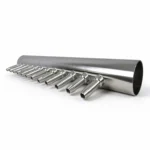
Regular water, neutral liquids or clean gases can be made of SUS304 stainless steel (the material indicated in the picture); if the medium is corrosive (such as acidic or alkaline liquids), a more corrosion-resistant material (such as 316L stainless steel or titanium alloy) should be selected; for high-temperature conditions, it is necessary to confirm whether the temperature resistance grades of the heating elements and sealing materials cover the upper limit of the actual working temperature. When selecting the type, it should also be noted that the equipment power should match the medium flow rate; when the flow rate is too low, even if the power is sufficient, it cannot effectively remove heat, which may lead to local overheating.
Lead Time Estimator
Enter your order quantity to get an instant estimate of production and shipping time.
Estimated total lead time–~–
- Production
- Shipping
- Estimated arrival (if ordered today)
This estimate is for reference only and does not constitute a contractual commitment. Actual lead time depends on order details, material availability, production schedule, customs clearance and carrier capacity. Please contact us for a confirmed delivery date.