Scan to add us on WeChat



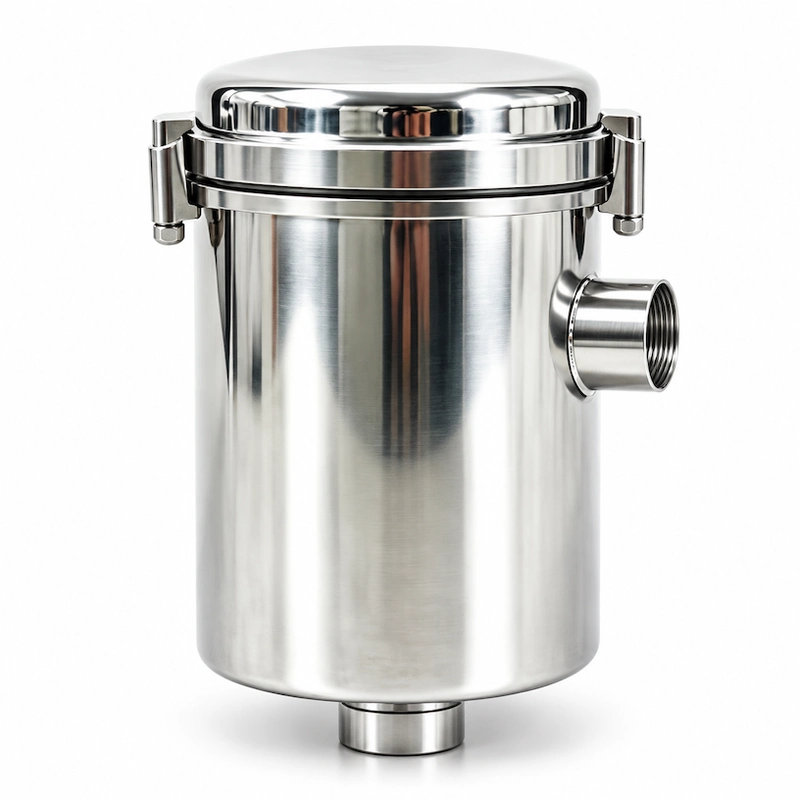
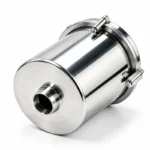
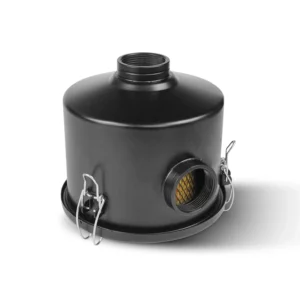
Stainless Steel Filter Tank
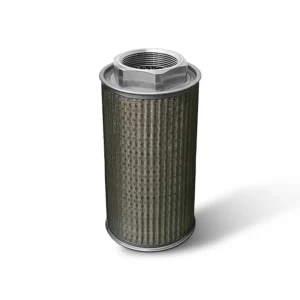
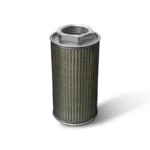
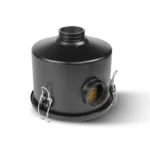
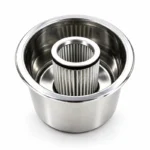
This filter canister is made entirely of 304 stainless steel, offering excellent corrosion resistance, high-temperature resistance, and strong pressure-bearing capacity. Its core structure consists of a quick-release latch lid and a built-in washable filter element, which ensures high air permeability while efficiently removing dust. The filter is reusable after cleaning, making it an eco-friendly, consumable-free design.
Request a Quote
Enter the quantity you need and add to your quote list for pricing inquiries.
Description
| Inch | 1 inch | 1.2 inch | 1.5 inch | 2 inch | 2.5 inch |
|---|---|---|---|---|---|
| Height | 280mm | 280mm | 280mm | 280mm | 280mm |
| Width | 280mm | 280mm | 280mm | 280mm | 280mm |
| Caliber | 25mm | 40mm | 50mm | 63mm | 76mm |
| Texture | 304 stainless steel | 304 stainless steel | 304 stainless steel | 304 stainless steel | 304 stainless steel |
Typical Application Scenarios
Industrial Dust Removal & Exhaust: Suitable for corrosive environments such as chemical plants and food processing workshops, as well as industrial scenarios where fans need protection from impurity wear.
Textile & Garment Processing: Serves as an intake filter for equipment such as digital printing cutters and small garment cutting machines, preventing fiber lint from entering the fan.
Food & Pharmaceutical Manufacturing: Used with paper cup forming machines, packaging machinery, and other equipment for air filtration in environments with high cleanliness requirements.
Environmental Protection & Chemical Engineering: Used for impurity collection in environmental protection equipment, or particulate interception in chemical gas transport systems.
Key Features
Reliable Material & Sturdy Structure: The entire canister body is made of 304 stainless steel with excellent corrosion resistance. It can withstand continuous operating temperatures of up to 800°C and will not easily deform or damage in harsh environments.
Quick-Release Design for Easy Maintenance: The lid is secured with latches, allowing it to be opened quickly without special tools, making it easy to remove the internal filter element for cleaning or replacement.
Washable Filter Element – Economical & Eco-Friendly: The built-in filter element can be washed directly with water and reused after drying, eliminating the need for frequent replacement consumables and saving money over the long term.
High Air Permeability – No Impact on Airflow: The pleated filter design efficiently intercepts dust, impurities, and solid particles while maintaining extremely high air permeability, with virtually no impact on the original fan airflow and performance.
Wide Interface Compatibility: Available with multiple threaded interface sizes from 1 inch to 2.5 inches. Manufactured with international standard threads for secure installation, it is compatible with various application scenarios such as fans, pneumatics, material feeding, and air supply.
Thickened Canister Wall – Quiet & Durable: The thickened canister wall not only enhances pressure-bearing capacity but also provides sound-dampening design for quieter operation.
FAQ
How often should the filter element be cleaned? How can one determine when it's time to clean it?
The frequency of cleaning depends on the dust concentration in the usage environment. If it is used in scenarios with high dust levels such as woodworking and sanding, it may need to be cleaned more frequently, perhaps even weekly or more; if it is used for preventive protection in a relatively clean workshop, it can be inspected once a month. The most direct criterion is to observe whether the fan’s air volume has significantly decreased, or to open the bucket cover and visually inspect whether the filter element surface is covered with a thick layer of dust. Once it is found that the suction force weakens or the filter element changes color and accumulates dust significantly, it should be cleaned immediately.
After the filter element is washed, does it have to be completely dried before being put back in?
It must be completely dried. If the filter element is still damp, put it back into the bucket and start the fan. The damp filter material will quickly absorb dust in the air, forming stubborn dirt that is difficult to remove. This will not only clog the filter holes and increase air resistance, but also easily breed bacteria and produce odors. It is recommended to place it in a ventilated area to dry naturally, or use low-pressure compressed air to blow it dry (note that the air pressure should not be too high). Ensure that the filter element is completely dry before reinstalling it.
Can this filtering bucket be used in environments with oil mist or humid exhaust gases?
It is not recommended for use in oil mist or high-humidity environments. This product is designed to intercept dry dust and solid particles. If the air being inhaled contains a large amount of oil mist or moisture, the pleated gaps of the filter element will be clogged with oil sludge or water film, and it is difficult to restore completely through water washing. The wind resistance will increase sharply, and even cause the fan to overload. If it is an oil mist environment, a dedicated oil mist filter should be selected; if it is a high-humidity and dusty gas, it is recommended to add a dehumidification or pre-treatment step before entering the filter tank.
Lead Time Estimator
Enter your order quantity to get an instant estimate of production and shipping time.
Estimated total lead time–~–
- Production
- Shipping
- Estimated arrival (if ordered today)
This estimate is for reference only and does not constitute a contractual commitment. Actual lead time depends on order details, material availability, production schedule, customs clearance and carrier capacity. Please contact us for a confirmed delivery date.