
7.5kW Permanent Magnet High-Speed Blower: How to Evaluate Its Drying Capacity — Interpretation of Reference Prototype Data
This article interprets the correlation between blower power, air knife configuration and drying rate based on a reference test prototype driven by a 7.5kW permanent magnet high-speed blower, and clarifies the applicable boundaries of the test data.
When selecting equipment, engineers often look for a universal conversion formula linking power to drying performance. No such all-purpose formula exists in the air knife drying industry. Nevertheless, measured data from reference prototypes can provide a clear order-of-magnitude benchmark. This article analyses a prototype fitted with a 7.5kW permanent magnet high-speed blower.
Prototype Configuration Overview
Reference test prototype specifications:
- Overall machine length: 1.8 m
- Effective working width: 500 mm
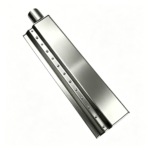
- 4 airflow-enhanced air knives (2 upper, 2 lower)
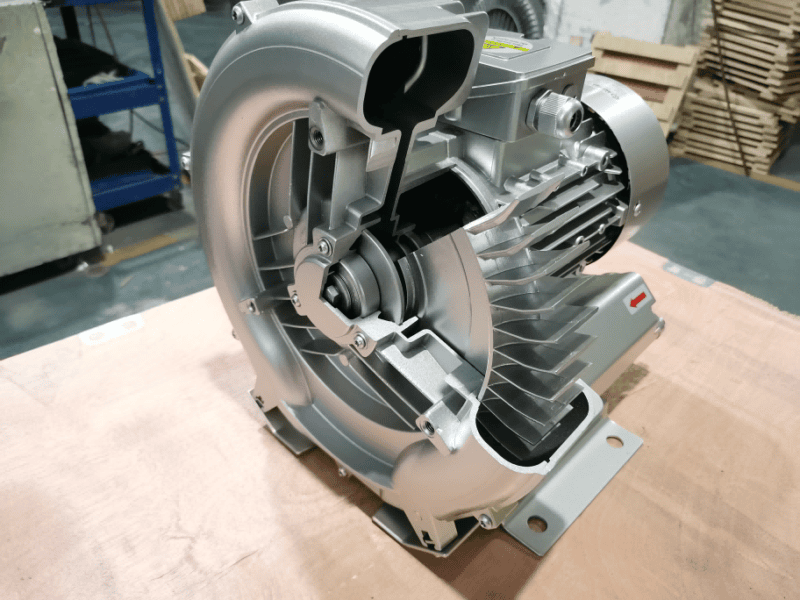
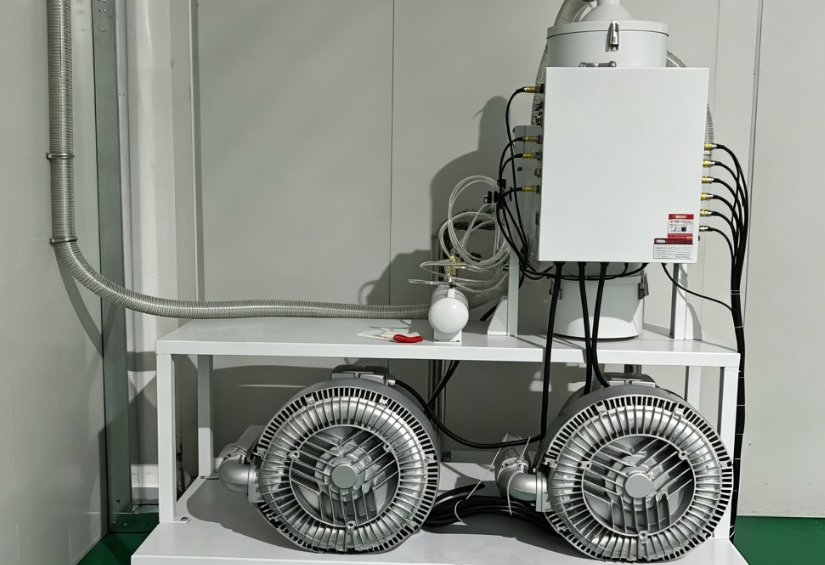
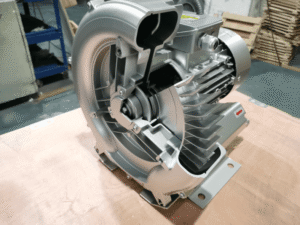
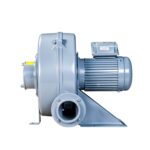
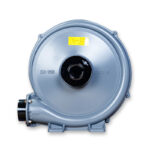
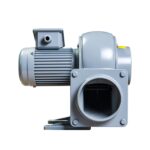
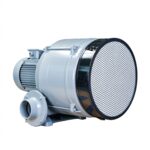
- 1 × 7.5kW permanent magnet high-speed blower
- Conveyor speed: 2.5 m/min
Measured Test Results
- 4 reciprocating blow cycles: approx. 93% drying rate
- 5 reciprocating blow cycles: approx. 98% drying rate
What the Data Indicates
First, a single 7.5kW blower is sufficient for surface water removal at a working width of 500 mm and a takt speed of 2.5 m/min, provided the air knives are properly arranged and reciprocating blow coverage is adequate. Second, increasing blow cycles from 4 to 5 lifts the drying rate by around 5 percentage points, showing a considerable marginal gain from extra blow passes. Third, the range of 93%–98% drying rate confirms minor residual moisture remains. Processes requiring complete dryness must incorporate inspection sorting or targeted supplementary blow-off in the system design.
What the Data Does NOT Indicate
Important note: these are reference results from a test prototype only, not a standard production model. The performance cannot be extrapolated to wider workpieces, complex part geometries or faster line speeds. Drying outcome is heavily affected by workpiece shape, conveyor speed and air knife layout. Every practical solution requires on-site evaluation and customisation.
Proper Way to Use Reference Data
Treat prototype data as an anchor benchmark rather than a performance guarantee. It illustrates the general operating envelope achievable with a 7.5kW-class setup. If your workpiece and production conditions fall close to this benchmark, the solution is likely cost-effective. If conditions deviate significantly, sample testing is mandatory to generate valid application data.
In the custom automation industry, measured empirical data is the most valuable asset, while assumptions are the costliest mistake. May every equipment engineer obtain reliable test data tailored to their own application.









-150x150.jpg)