Within the extensive process chain of automotive manufacturing, the drying stage after cleaning has long occupied an awkward position: seemingly simple, yet potentially catastrophic. Many components emerge from the cleaning tank with immaculate surfaces, only to be rejected before warehousing or assembly due to rust spots, coating pinholes, and poor adhesion. The root cause is often residual moisture invisible to the naked eye. Air knife drying systems have become standard equipment on modern automotive component production lines not as a passive equipment upgrade trend, but because residual moisture creates unavoidable quality risks given the material properties, complex geometries and downstream process requirements of auto parts. Under current engineering conditions, air knife drying represents the optimal solution balancing throughput, quality and operating cost.
The Cost of Residual Moisture: More Than Just Inadequate Drying
Automotive components are far more sensitive to water than ordinary industrial goods. After spray or ultrasonic cleaning, trapped moisture easily accumulates in gaps and blind holes of die-cast and machined metal parts. Insufficient drying leads to watermarks and rust formation during storage, directly resulting in component scrap. This failure follows a clear physical mechanism: moisture trapped within complex profiles or recessed cavities vaporizes rapidly under subsequent baking temperatures (around 180°C). The expanding steam ruptures the not-yet-fully-cured coating and creates pinholes. Residual moisture also triggers blistering, adhesion failure and recurring corrosion. A more concealed failure mode occurs during pre-treatment for coating. If salts and contaminants remain on metal surfaces after rinsing, ambient moisture can penetrate the paint film via osmotic pressure, lifting the coating from the substrate and forming blisters that may only appear months after vehicle delivery. This means quality defects from incomplete drying are significantly delayed and amplified. They cannot be caught by routine visual inspection at the end of the production line, but manifest later as coating failure and corrosion perforation on finished vehicles.
Operating Principle of Air Knife Drying Systems: Aerodynamic Force Instead of Excessive Heat
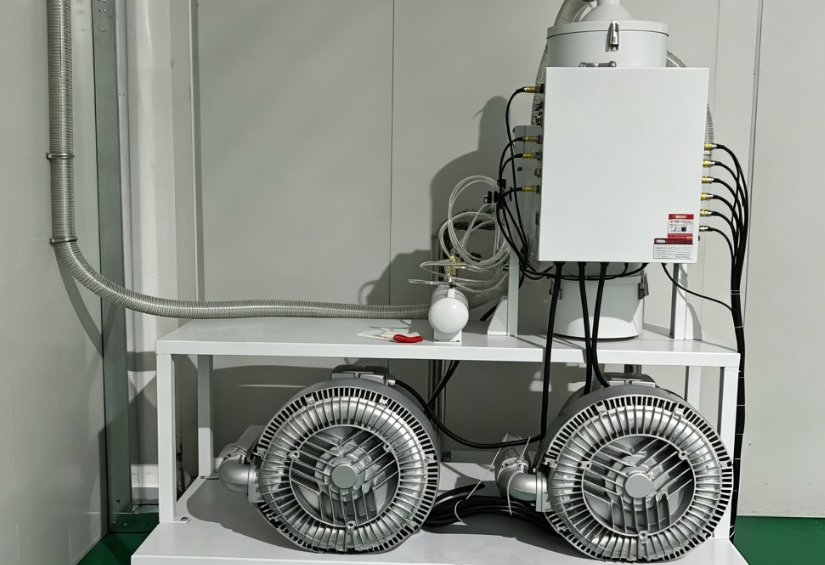
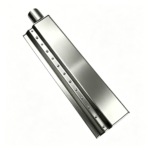
The technical core of air knife dryers relies on two coordinated physical effects. The first is the Coandă effect: fluid tends to adhere to curved surfaces rather than travelling in a straight line. Curved internal guide vanes inside the air knife ensure the primary airflow maintains a directional, stable wall-attached jet after exiting the narrow slit. Outlet gaps are typically 0.3–3 mm wide, with nozzle compression ratios up to 40:1. The second effect is entrainment amplification. The thin high-speed air sheet ejected from the slit draws surrounding static air into the main jet, forming an amplified air curtain with 30–40 times the primary airflow volume. The system only consumes moderate fan power to achieve a sweeping effect many times larger than the initial air output.
When acting on workpiece surfaces, air knives apply two forces simultaneously: normal impact force that dislodges the water film from the substrate, and tangential shear force that strips and carries away loosened moisture along the surface. The water film is peeled off and entrained into the high-speed airflow within milliseconds, rather than evaporated by heat. This mechanical drying approach fundamentally removes dependencies of hot-air drying on workpiece heat capacity, temperature limits of seals and coating curing windows. It also avoids the high energy consumption and oil contamination risks associated with compressed air blow-off.
Engineering Comparison with Alternative Solutions: Why Air Knives
Before air knife technology matured, automotive production lines relied on three mainstream drying methods, each with inherent limitations. Hot-air drying suffers from high energy consumption and narrow process windows. Conventional ovens are simple and direct, yet demand high thermal power and elevated temperatures. Many precision seals cannot withstand such heat, greatly restricting applicable processes. For parts with blind holes and complex internal cavities, heat must penetrate the entire workpiece to evaporate trapped moisture; heating duration and energy consumption rise sharply with wall thickness and geometric complexity.
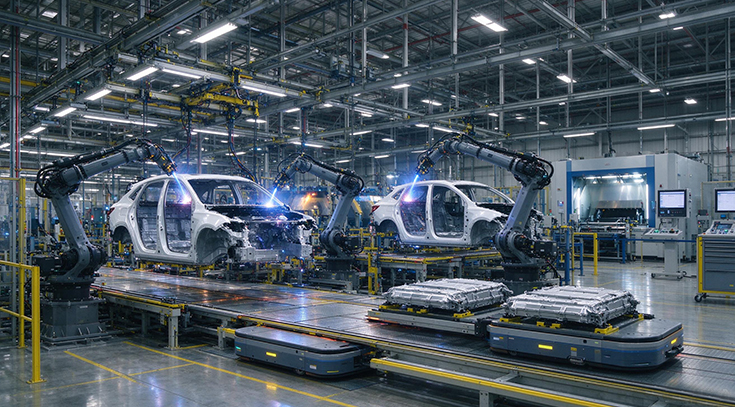
Compressed air blow-off is hampered by poor energy efficiency and air quality concerns. Compressed air systems account for 10%–30% of industrial site power consumption, and most factories overlook substantial waste within these systems. Critically, compressed air frequently carries oil and water, which may introduce new contaminants onto cleaned surfaces. Air knife systems hold a distinct advantage in energy efficiency. Replacing hot-air ovens or compressed air blow-off with air knife dryers typically cuts energy use by 50%–80%, with drying completed within seconds to a dozen seconds. On one automotive profile production line, the original drying system consumed over 90 kW, while the air knife drying system only requires 11–22 kW, delivering over 200% higher throughput and annual cost savings of 3–5 million RMB.
Natural air-drying and centrifugal dewatering are limited by line takt time and workpiece geometry respectively. Natural drying is incompatible with continuous-flow production. Centrifugal dewatering removes bulk surface liquid quickly, yet centrifugal force cannot evacuate moisture trapped in geometric shadow zones such as blind holes, threads and recessed cavities.
Dewatering Blind Spots in Complex Geometries and Air Knife Countermeasures
The intricate shapes of automotive components present the real challenge for drying. Mounting points, bolt holes and recessed areas on suspension parts naturally collect water. Threaded holes retain moisture via surface tension along helical passages; conventional airflow skims over thread surfaces without penetrating deep into the screw channels. Welded assemblies and castings trap moisture at low points inside internal passages, weld crevices and irregular contours. Standard straight air knives excel at covering large flat surfaces but struggle to penetrate cavities and blind holes. Higher pressure does not resolve geometric shielding, as increased airflow still travels along the surface instead of penetrating in the depth direction.
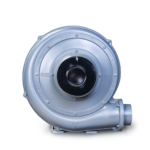
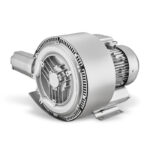
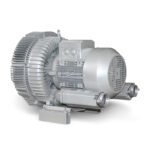
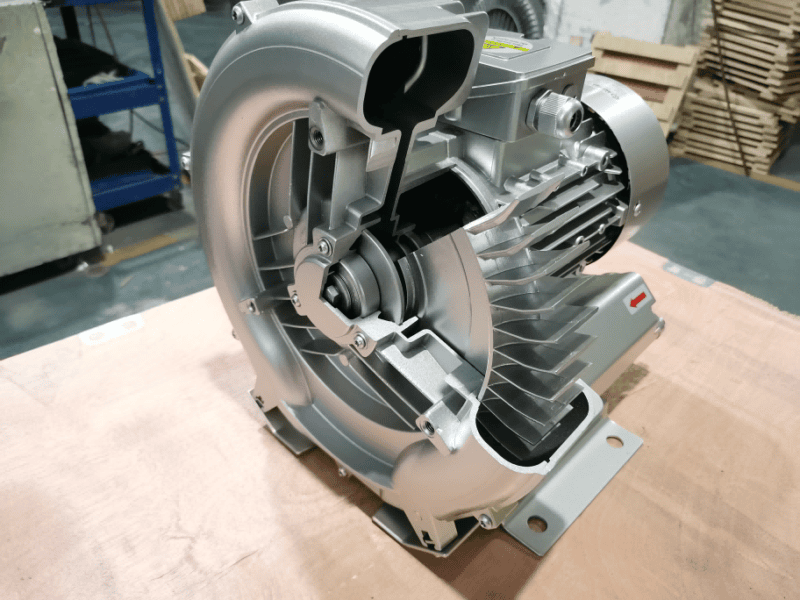
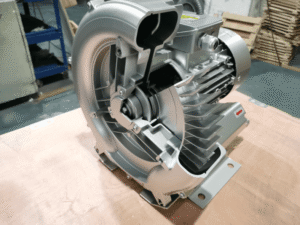
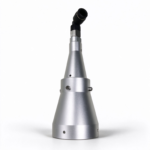
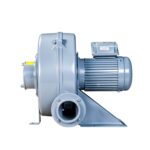
Modern air knife systems address this challenge at two engineering levels. First, customizable airflow profiles: air knives can be manufactured in straight, annular, arched or contoured shapes to match workpiece geometry for specific parts. Multiple air knives arranged from top, bottom and opposite sides eliminate dead zones, and height-adjustable frames adapt to varying workpiece dimensions. Second, coordinated air source and air knife selection: high-speed blowers paired with air knives form cold drying systems. High-velocity airflow strips residual moisture from blind holes and gaps without heating, suitable for a wide range of metal components. Negative pressure channels can simultaneously blow away and collect metal debris to prevent recontamination. For heavily shielded areas, focused air nozzles deliver concentrated jets to pierce cavities and thread passages, complementing the broad coverage of air knives.
Production Line Integration Logic: Drying Is Not an Isolated Process
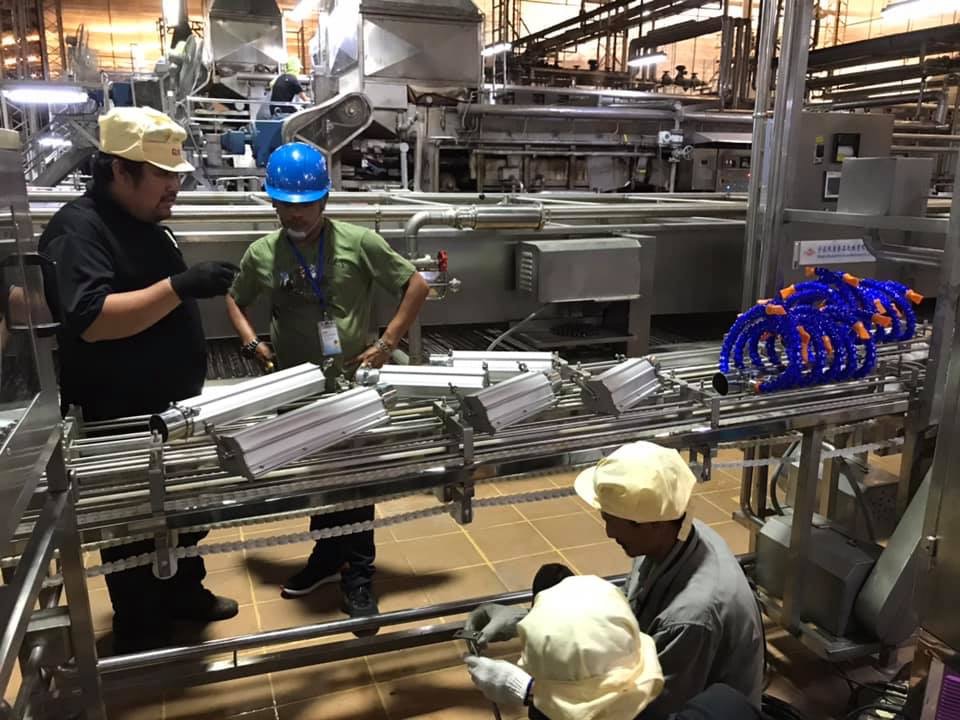
Where air knife dryers sit within the production line defines engineering requirements extending far beyond simple drying performance. A typical through-type cleaning sequence embeds air knife water stripping between spray cleaning and hot-air drying: Manual loading → Ultrasonic cleaning → Spray wash → Spray rinse → Final spray rinse → Air knife water stripping → Manual touch-up blow → Hot-air drying → Manual unloading
In this workflow, air knives perform pre-dewatering: contact-free fast removal of free moisture on surfaces and shallow gaps. This drastically reduces load and required residence time for the downstream hot-air section, which only needs to handle minimal residual humidity. For heat-sensitive parts, air knife systems can complete cold drying independently, eliminating thermal damage to seals and precision surfaces from heating.
From the perspective of continuous operation and reliability, air knife systems integrate seamlessly with automated conveyance. Air knife lengths are customised to line layout with flexible mounting options for retrofitting into existing conveyor systems. Blowers are selected for long-duration continuous operation to match two-shift or three-shift production schedules, and motor enclosure ratings suit the high-humidity environment of cleaning workshops. These engineering details establish air knife dryers not as standalone drying equipment, but as a critical quality control node linking cleaning, drying and part transfer.
Conclusion
The fundamental reason for equipping automotive component lines with air knife dryers can be summarised: residual moisture is one of the lowest-cost sources of defects, yet carries extremely high failure consequences in automotive manufacturing. Air knife drying offers an engineered method to systematically eliminate this risk without thermal damage, excessive energy consumption or compromised line takt time. It leverages the Coandă effect to amplify limited aerodynamic energy, uses coupled impact and shear forces instead of evaporative heating, and employs custom air knife profiles to handle the full spectrum of automotive part geometries, from flat plates to blind-hole castings. As coating adhesion, assembly precision and long-term corrosion resistance become core competitive indicators for auto parts, drying can no longer be treated as a secondary step handled casually. The transition of air knife dryers from optional add-ons to standard process equipment reflects this manufacturing principle put into practice.







-150x150.jpg)