Scan to add us on WeChat


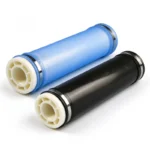
Tubular Microporous Aerator
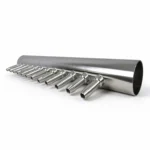
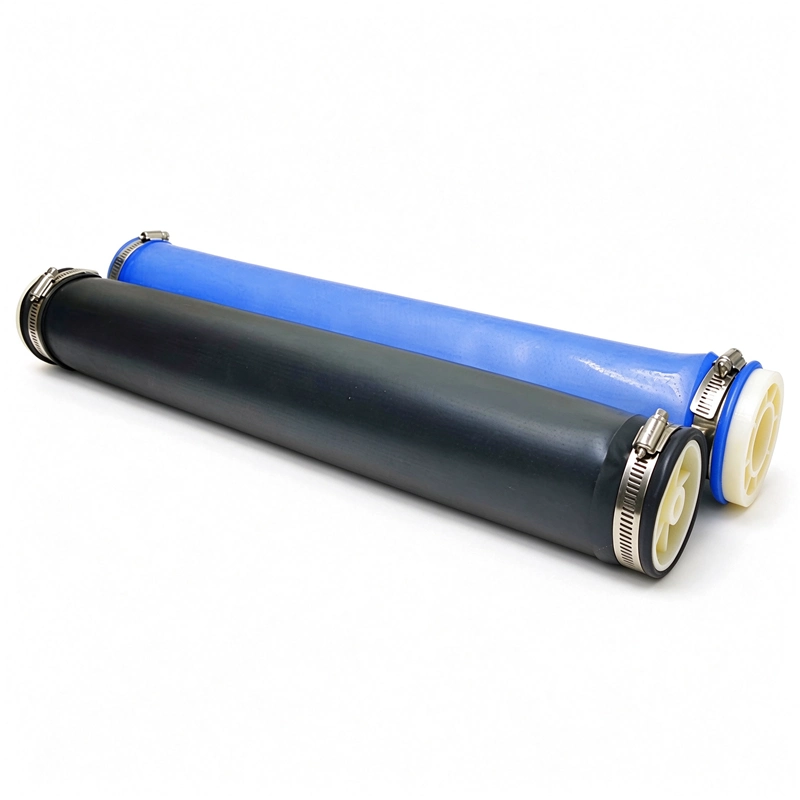
The tubular micro-porous aerator consists of an air supply main pipe, a support tube, and a micro-porous aeration membrane. It typically uses an EPDM rubber or silicone membrane paired with an ABS or UPVC support tube. During operation, air inflates the membrane, opening the micropores to release fine bubbles generally smaller than 3 mm in diameter; when the air supply stops, the membrane contracts elastically to close the micropores and prevent wastewater backflow. Thanks to its simple structure, high oxygen transfer efficiency, and easy maintenance, it is widely used in municipal and industrial wastewater treatment.
Request a Quote
Enter the quantity you need and add to your quote list for pricing inquiries.
Description
| Project | unit | JM-65*500 | JM-65*750 | JM-65*1000 |
|---|---|---|---|---|
| Optimal ventilation capacity | m³/h.unit | 3 | 4.5 | 6 |
| Design ventilation volume | m³/h.unit | 4 | 7 | 10 |
| Maximum ventilation capacity | m³/h.unit | 6 | 10 | 16 |
| Service zone | ㎡/unit | 0.82~1.26 | 0.89~2.11 | 0.8~2.35 |
| Oxygen utilization efficiency | % | 25~38 | 25~38 | 25~38 |
| Number of holes drilled | unit | 9080 | 10300 | 13880 |
| Bubble diameter | mm | 0.8~2.0 | 0.8~2.0 | 0.8~2.0 |
| Oxygen content filling capacity | kgO₂/kw.h | Microporous 7.5 (with a water depth of 5 meters) | / | / |
| Depth of water | 6 meters | 6 meters | 6 meters |
Typical Application Scenarios
Municipal Wastewater Treatment: Used for oxygenation in biochemical tanks for urban domestic wastewater; a key equipment item in mainstream processes such as the activated sludge process and A/O process.
Industrial Wastewater Treatment: Suitable for wastewater treatment in industries including petrochemical, textile, chemical, papermaking, printing and dyeing, slaughterhouse, brewing, pharmaceutical, and tanning.
Biological Treatment Facilities: Applied in biological contact oxidation tanks, biological stabilization ponds, BAF (Biological Aerated Filter), and biochemical basins.
Retrofit of Aging Systems: Existing blower aeration systems can be directly retrofitted to this tubular aerator without changing the original blowers and air intake piping.
Key Features
Advantages:
High Oxygen Transfer Efficiency and Energy Savings: Produces fine, uniform bubbles; oxygen transfer efficiency can reach over 30% at a 6-meter clean water depth, and oxygen transfer power efficiency can exceed 7.5 kgO₂/kW·h, helping reduce operating energy consumption.
Backflow Prevention and Anti-Clogging: Features a self-closing pore design — the membrane contracts and closes when air supply stops, effectively preventing wastewater backflow and sludge clogging; some models also integrate a check valve structure.
Strong Corrosion Resistance: EPDM or silicone membranes offer good resistance to acids, alkalis, phenol, oils, and other media; ABS or UPVC support tubes are also corrosion-resistant.
Easy Installation and Maintenance: The tubular structure combines air transmission and distribution in one, eliminating the need for dedicated horizontal air distribution piping; some liftable designs allow inspection and maintenance without draining the tank or shutting down operations.
Outstanding Cost-Effectiveness: Approximately 60% of the cost of disc-type rubber membrane aerators, and requires no air purification equipment or backwash system, making management convenient.
FAQ
How often should the membrane of a tubular micro-porous aerator be replaced?
There is no fixed replacement cycle; it depends primarily on the membrane material and water quality. EPDM (ethylene propylene diene monomer) rubber typically lasts 3–5 years in standard municipal wastewater and can last longer with proper maintenance. Silicone membranes offer better chemical resistance and anti-aging performance, with a lifespan of 5–8 years, though at a higher cost. Replacement should be considered when bubbles become noticeably larger (exceeding 5 mm), aeration becomes uneven, or blower power consumption increases by more than 15% at the same treatment volume and cannot be resolved by cleaning.
How do I choose between EPDM and silicone membranes?
The choice depends on water quality characteristics. EPDM is cost-effective and resistant to weak acids and alkalis, making it suitable for municipal domestic wastewater, food processing wastewater, and conventional papermaking wastewater — scenarios with no or low oil content. It is the standard choice for the vast majority of projects. Silicone resists oil, organic solvents, and high temperatures (−60°C to 200°C), making it suitable for petrochemical, pharmaceutical, oil-containing wastewater, or cold northern regions. Although it costs roughly twice as much, it offers longer and more stable service life under demanding conditions.
Will wastewater flow back into the air piping after the blower stops?
Normally, no. The rubber membrane of a tubular micro-porous aerator has a self-closing function: when the blower stops supplying air, the membrane contracts under its own elasticity, the micropores close, and residual pressure in the pipe plus external water pressure press the membrane tightly against the support tube, preventing backflow. However, backflow risk increases significantly if the membrane has aged and hardened, if dirt around the micropores prevents proper closure, or if the membrane is damaged. Regularly checking membrane elasticity is key to preventing backflow.
Lead Time Estimator
Enter your order quantity to get an instant estimate of production and shipping time.
Estimated total lead time–~–
- Production
- Shipping
- Estimated arrival (if ordered today)
This estimate is for reference only and does not constitute a contractual commitment. Actual lead time depends on order details, material availability, production schedule, customs clearance and carrier capacity. Please contact us for a confirmed delivery date.